

%201.svg)

September 29, 2026
The hard part of PPWR isn't asking suppliers. It's reading what they send back.

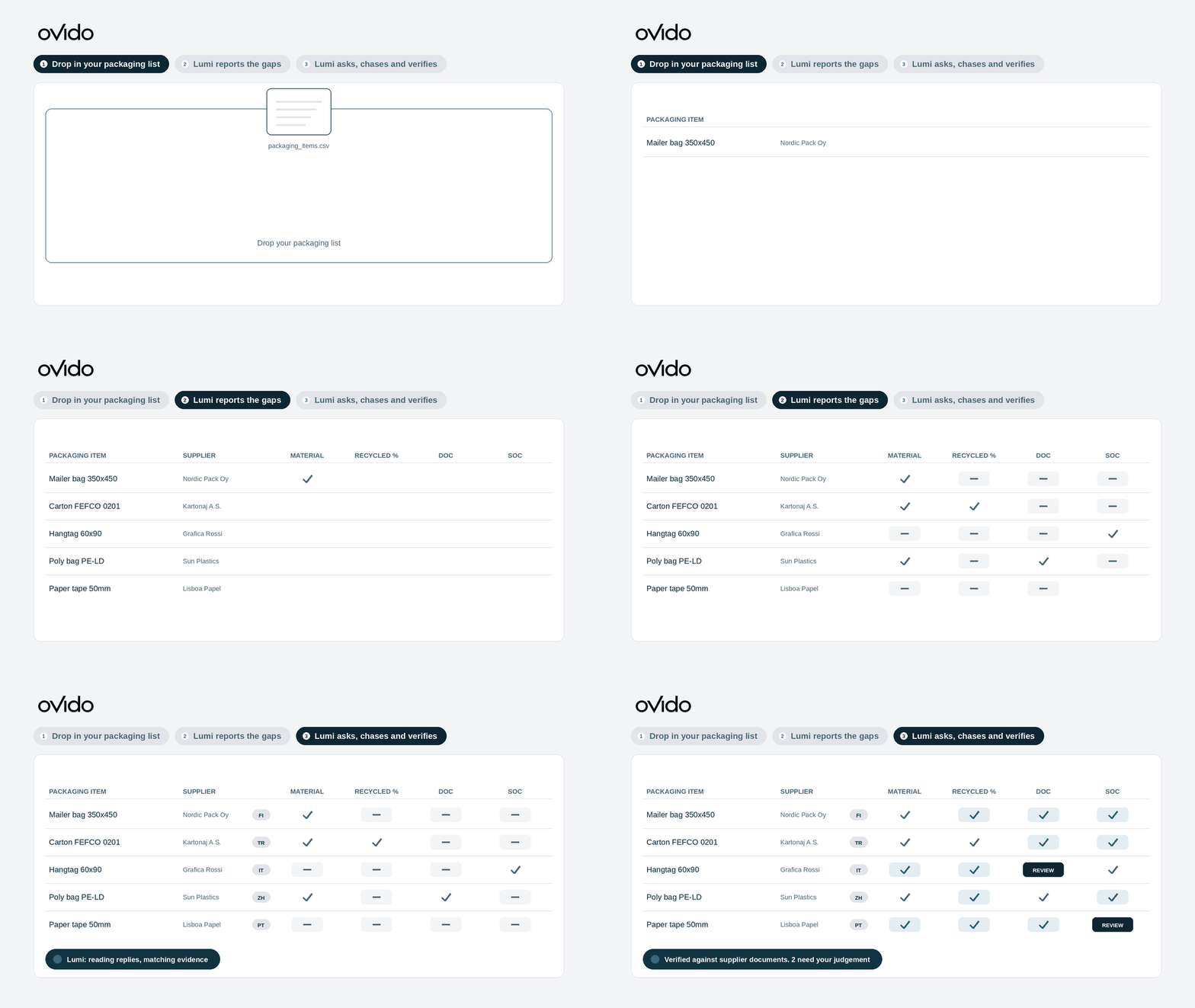
What we learned watching customers work through their PPWR implementation this summer.
Over the last few weeks, the EU Packaging and Packaging Waste Regulation has been at the centre of most of our customer conversations.
What I found particularly interesting is that the implementation challenge was remarkably similar regardless of the business. It didn't matter whether the company was a fashion brand, a textile manufacturer, a cosmetics company, a chemical producer or an accessories brand. It didn't matter whether they purchased packaging materials, packaged finished goods or worked through contract manufacturers.
The operating models were different. The products were different. The packaging was different.
The underlying implementation challenge wasn't.
Everyone starts in the same place
Before the Nordic summer break, many of our customers used Ovido to define the data and documents they needed from suppliers. Tasks were created, supplier inquiries prepared, and Lumi automatically started the conversations in each supplier's preferred language, tracking every response along the way.
Useful.
What I found much more interesting was what happened after suppliers started responding.
Suppliers rarely answer the question you asked
A typical PPWR request may ask for several data attributes together with supporting evidence: a Declaration of Conformity, technical specifications, information about substances of concern, heavy metal declarations or evidence supporting recycled content.
In practice, suppliers rarely respond exactly as requested. They are busy. They want to help, but they also need to be efficient. So they send what they already have, or what they can find quickly.
Which means you may ask for three documents and receive one.
Sometimes that one document contains everything you need.
Sometimes three documents still don't answer one question.
That is where the real operational work begins. Someone has to read every document, understand its content, determine whether the requested information is already supported, identify what is still missing, and decide whether another supplier interaction is needed.
Now imagine doing that across hundreds of suppliers and thousands of documents.
Uploaded is not the same as answered
This is the part I found genuinely interesting about watching Lumi work through it.
Lumi wasn't built to check whether a requested document had been uploaded. It was built to evaluate whether the information the customer asked for is actually supported by the documents the supplier provided.
That is an important difference.
A supplier may upload a technical specification instead of a declaration. If the requested information is already contained in that specification, Lumi recognises it, links the evidence to the requested data point, and only continues the conversation where something is genuinely missing.
The alternative is a checklist that says a file arrived, and a person who still has to open it to find out whether that file was any use.
What people came back to
When our Finnish customers returned from their summer holidays, they didn't come back to hundreds of supplier emails waiting to be processed. They came back to clarity, knowing:
- which suppliers had responded
- which requests were complete
- which packaging records were ready for review
- where supporting evidence was still missing
- where expert judgement was actually needed
Where AI starts creating operational value
For me, that last point is where AI starts creating operational value in compliance work.
Not because it replaces packaging, procurement or compliance expertise. Because it orchestrates the repetitive work that sits between suppliers providing information and experts making decisions.
The result is better visibility, higher-quality information, and more time spent evaluating, improving and deciding rather than searching, reading and verifying.
Technology does what technology does best: orchestrating repetitive work.
People do what people do best: applying expertise, making decisions and creating value.
What getting started actually looks like
The reason this is worth writing about is that the starting point is unglamorous. There is no data model to design first.
- Drop in your packaging list. A spreadsheet of packaging items is enough to begin. Mailers, cartons, hangtags, tapes, polybags.
- Let Lumi report the gaps. Rather than you deciding what to ask for item by item, Lumi shows which data points and documents are actually missing against PPWR, and which you already hold.
- Let Lumi ask, chase and verify. Inquiries go out in each supplier's own language, replies are read as they arrive, and evidence is matched back to the specific data point it supports. What surfaces at the end is the short list that needs a person.
That last list is the point. It is usually much shorter than people expect.
If you are in the middle of your own PPWR implementation, it's worth being honest about which part is actually consuming the time: obtaining supplier information, verifying it, or following up on what is still missing. In most of the conversations we've had, it isn't the first one.
Loredana Moimas
Co-founder
Loredana co-founded Ovido in 2024 to help fashion and consumer brands turn growing regulatory demands into real business value. She is working directly with our brand and manufacturing customers to show how Digital Product Passports can become part of a brand's real value story, not just a compliance checkbox.
More to read
Keep reading


August 7, 2026
The hard part of PPWR isn't asking suppliers. It's reading what they send back.

February 10, 2026
the textile ecodesign study (3rd milestone): scope, timeline, and what it signals for future ESPR requirements